A piece of embroidery can hold your attention as firmly as a whole streetscape. In Gjirokastër’s old bazaar, try giving the smaller things their turn: a stitched border, a carved surface, the grain of wood. Looking closely opens a different route into the city, one shaped by materials, questions and the pleasure of choosing well.
Start with the materials
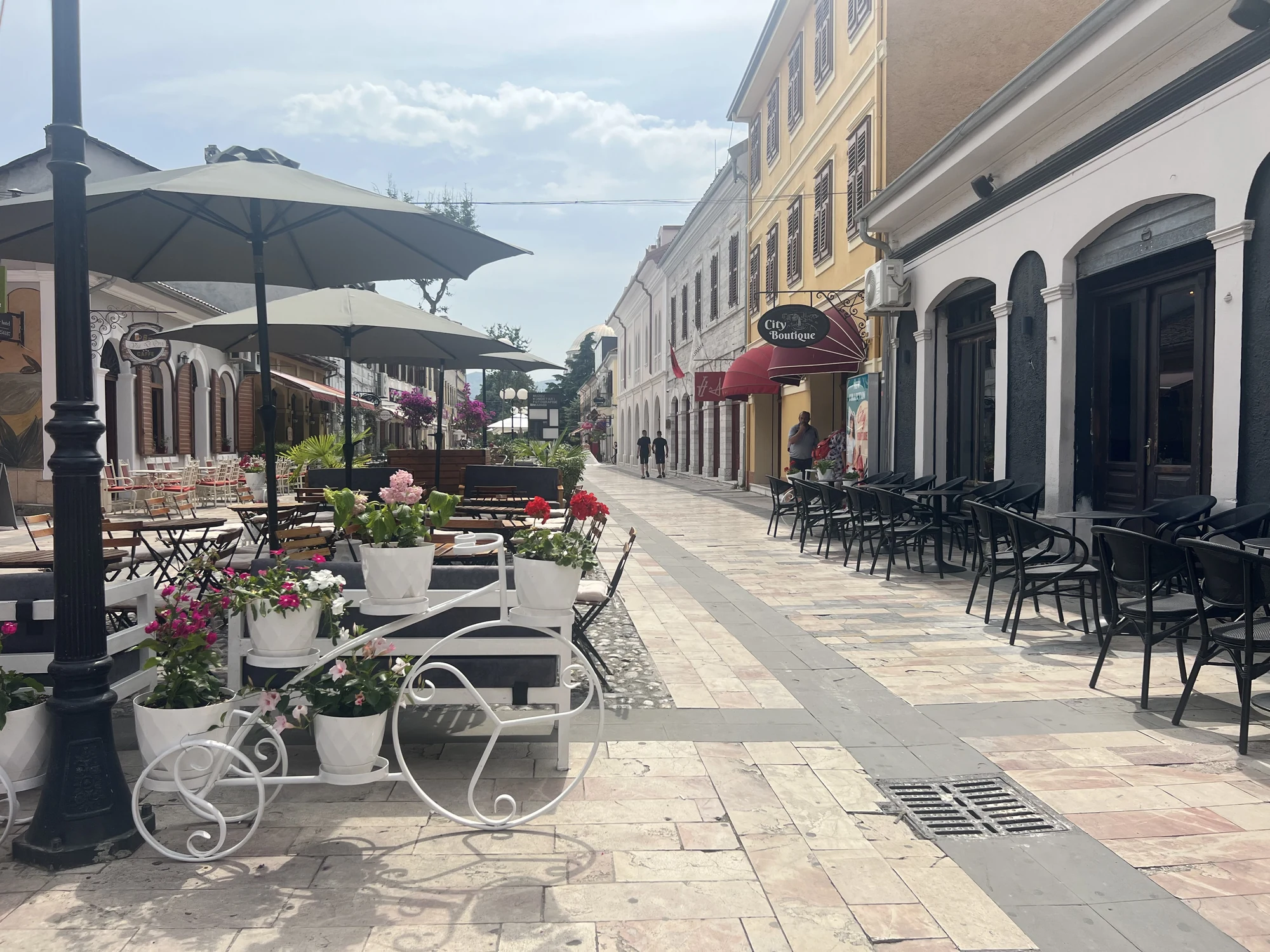
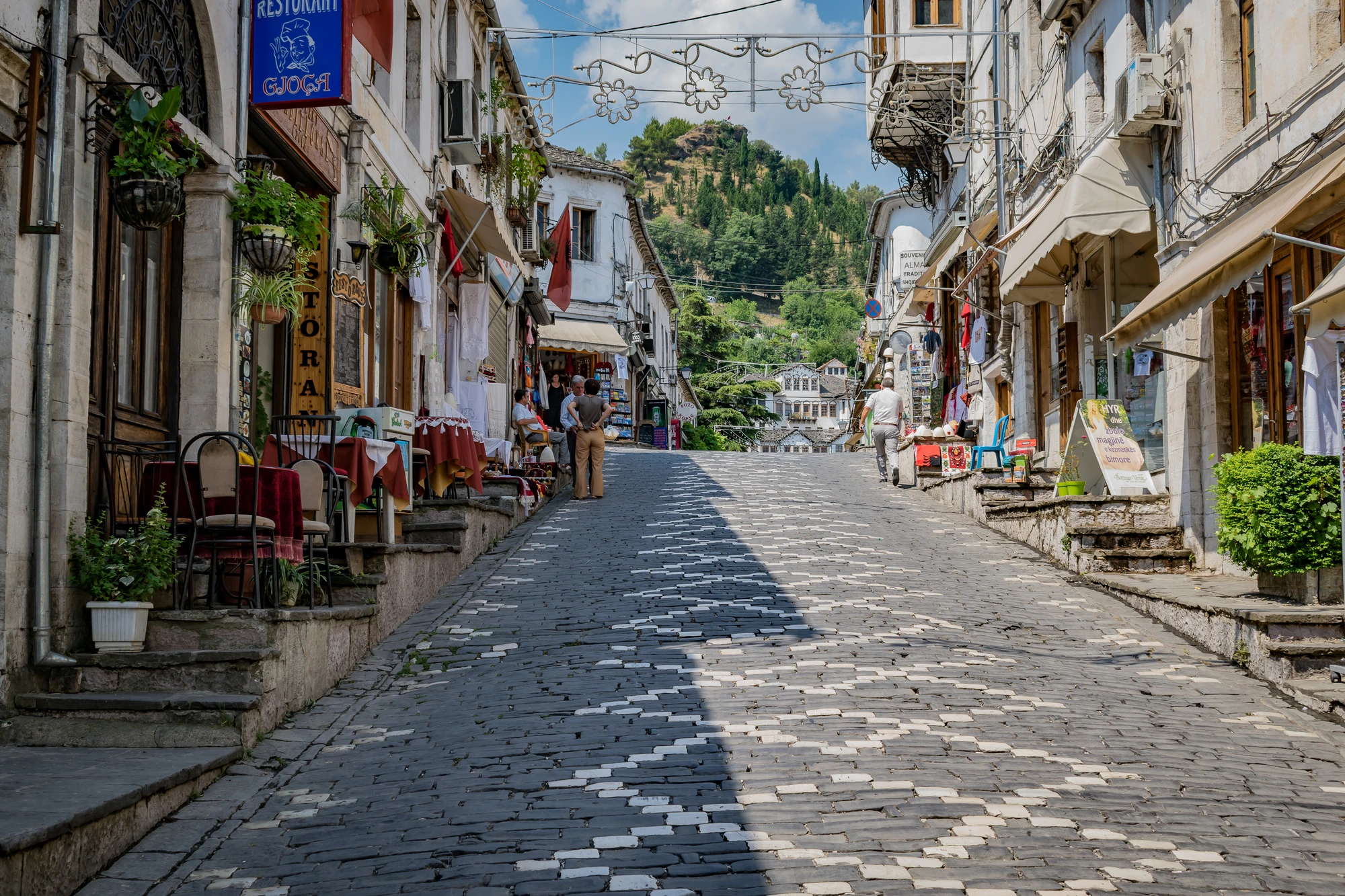
The old bazaar sits at the centre of Gjirokastër’s historic town, among narrow lanes and small shops. Stone is part of the experience before you buy anything: it shapes the streets and buildings around you. Let that setting sharpen your eye for texture, from a rough surface to a carefully finished edge.
Make a first circuit without a shopping list. Notice which materials keep drawing you back. Albania’s National Tourism Agency identifies carpets, woodwork, ceramics and jewellery among the bazaar’s crafts. That range gives you several ways to look, whether you enjoy woven patterns, carved forms or the weight of a small ceramic object.
Follow a thread or a carved line
Choose one detail and spend a moment with it. On a textile, look at the border, the repeated shapes and how the edges are finished. On woodwork, follow the grain and the carved lines. Ask before handling a piece or turning it over; a closer look should also be a considerate one.
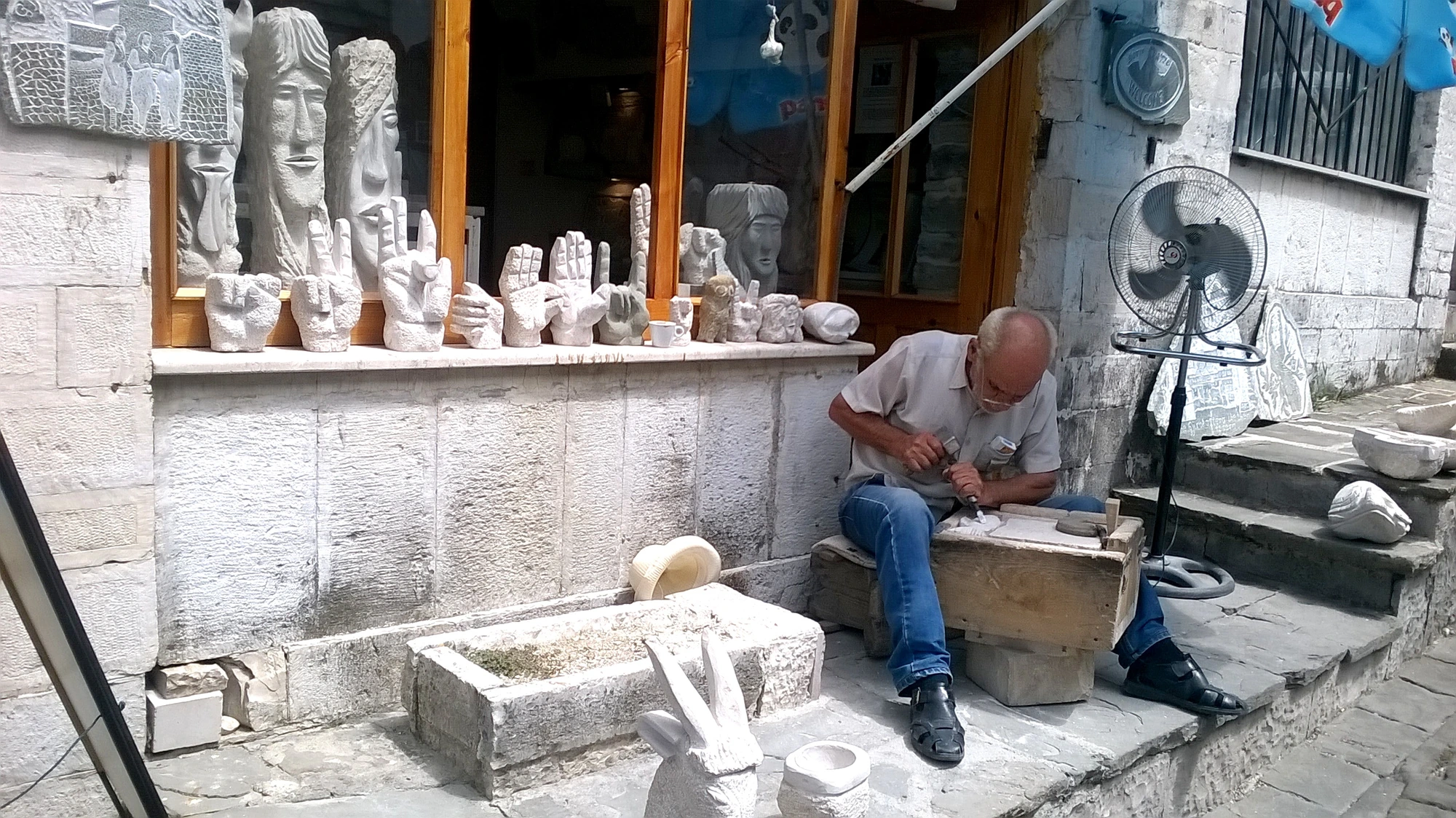
Gjirokastra’s artisan documentation records skills including wood and stone carving, metalwork, weaving and needlework. Think of these as different conversations with a material. Ask how a pattern is made or what a tool does. If someone is working, ask whether you may watch, leave space around their hands and ask again before taking a photograph.
Ask where it was made
An address in the bazaar cannot tell you an object’s whole story. Ask three simple questions: Who made this? Where was it made? What is it made from? A piece from elsewhere in Albania can be just as meaningful, provided you understand its origin and choose it for that reason.
The Gjirokastra Foundation’s Artisan Centre documentation describes work from both Gjirokastra and other Albanian regions. Keep that wider picture in mind rather than assuming every souvenir is locally handmade. If a particular technique or origin matters to you, ask the seller to explain it. A useful answer is more valuable than a label that merely says “traditional”.
Choose something you will live with
Imagine the object after the journey. Would you use that textile on a table, or enjoy the carved piece on a shelf? During a longer stay in Albania, a carefully chosen item can become part of your daily surroundings. In your own holiday apartment, one personal piece can carry more memory than a roomful of matching souvenirs.
Check dimensions, weight and how you will carry it before deciding. Ask about cleaning and care, and request suitable wrapping for anything fragile. Give yourself permission to choose just one thing. The aim is an object you will still notice when the bags are unpacked and the holiday photographs have been put away.
Leave room for a second look
Wear comfortable shoes for the stone lanes and keep your plans loose enough to pause. Walk beyond the first display, compare a few pieces and return to the one you remember. You do not need to turn the visit into a hunt for the most unusual purchase; curiosity is enough to give it direction.
Before leaving, note the maker’s name and the material, if the seller can provide them. Ask whether you may photograph the piece beside its shop. Later, that small record can bring back the conversation as clearly as the object itself: a reminder of an afternoon when Albania became a little more familiar.
Discover Përmet, the Vjosa and BënjëExplore homes for sale across Albania
Sources
EDITORIAL NOTE
This article is general market commentary, not legal, tax, financial or investment advice. Property status, ownership, permits, specifications, pricing and availability require independent verification before commitment.